
How AI Is Reshaping Video Memory Demand: Market Implications for 2024 and Beyond
How artificial intelligence is transforming GPU video memory requirements, market dynamics, and enterprise infrastructure planning in 2024 and beyond.
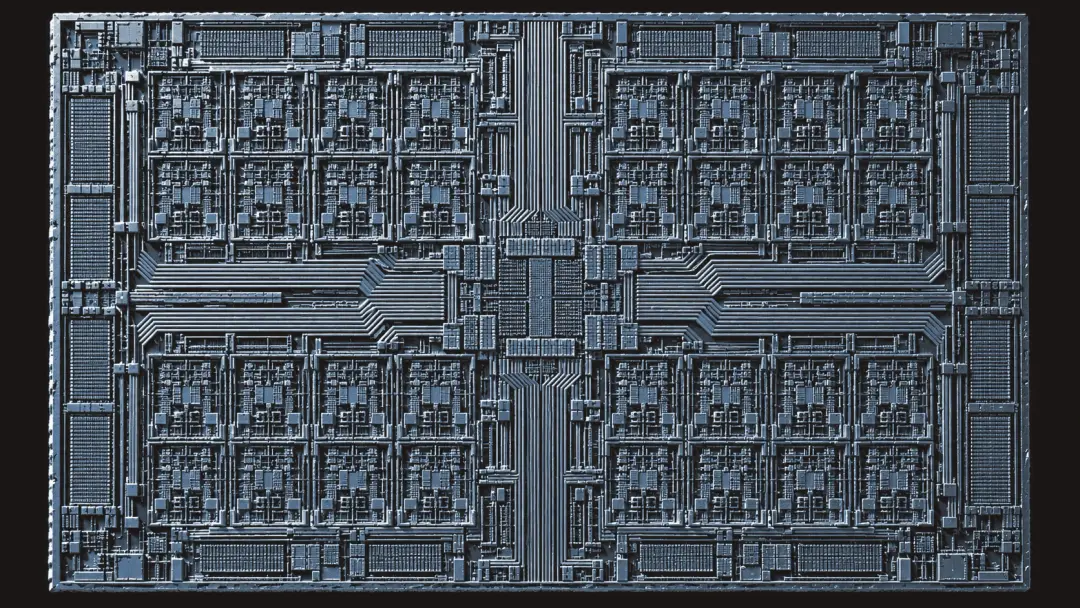
The AI-Driven Memory Revolution
The artificial intelligence boom has fundamentally altered the GPU landscape. What began as hardware optimized for rendering graphics has become critical compute infrastructure for AI workloads, driving unprecedented demand for video memory capacity and bandwidth. Large language models, computer vision systems, and neural networks now consume GPU resources at scales that were unimaginable five years ago.
This shift didn't happen overnight. Early AI research in the 2010s relied on consumer-grade GPUs with 8–12 GB of VRAM. Today's frontier models routinely require hundreds of gigabytes across multiple accelerators. The implications extend beyond specifications—they reshape corporate procurement strategies, influence geopolitical competition, and redefine what constitutes adequate compute infrastructure.
Understanding these changes matters if you're planning data center investments, evaluating hardware lifecycles, or tracking supply chain dynamics. The GPU market has split into distinct segments, with AI artificial intelligence GPU VRAM market demand now driving product roadmaps more than gaming ever did.
Why AI Models Need Exponentially More VRAM
Modern AI architectures demand memory in ways that traditional graphics workloads never did. Large language models with tens of billions of parameters can require over 100 GB of memory just to load weights in half-precision format, though exact figures vary by architecture and optimization technique. Training such models, rather than merely running inference, multiplies memory needs by factors of three to five when accounting for optimizer states, gradients, and activation caching.
The numbers grow steeper with scale. Models exceeding 500 billion parameters push memory requirements into terabyte territory, necessitating clusters of high-end accelerators. Research on artificial intelligence systems shows that parameter counts in frontier models have grown rapidly since 2018, far outpacing traditional improvements in memory density.
This trajectory creates a bottleneck. While compute performance improves through architectural innovations and process nodes, memory capacity and bandwidth scale more slowly. The gap between what models want and what single cards can provide has become the defining constraint in AI infrastructure planning. Organizations face a choice: distribute workloads across many GPUs with the overhead that entails, or wait for next-generation hardware that may or may not arrive on schedule.
From Consumer to Enterprise: The Market Pivot
GPU manufacturers have responded by reorienting product lines. Data center accelerators now command premium pricing and receive design priority over consumer cards. Features like error-correcting memory, NVLink interconnects, and multi-chip modules target AI workloads specifically, not gaming frame rates.
The semiconductor industry has observed this shift through revenue distribution. Enterprise and data center GPU sales have expanded significantly, with high-end silicon output increasingly directed toward AI and compute workloads rather than consumer graphics. Consumer graphics cards, once the flagship category, now share architectures and manufacturing capacity with products designed for different use cases entirely.
This reorientation influences availability and pricing. When foundry capacity is constrained, AI accelerators take priority. When export restrictions limit chip sales to certain regions, geopolitical factors determine which customers receive allocation. The result is a market where traditional demand signals no longer predict supply, and enterprise buyers operate under different rules than individuals.
The practical consequence for procurement teams: lead times stretch, specifications diverge, and lifecycle planning must account for product lines that evolve primarily to serve AI rather than graphics. What works for gaming may lack the memory bandwidth or capacity needed for inference servers.
Architectural Responses to AI Memory Pressure
Chipmakers are exploring several paths to address VRAM constraints. High-bandwidth memory (HBM) technologies stack memory dies vertically, increasing bandwidth without enlarging the footprint. HBM3 and emerging HBM3E variants offer transfer rates exceeding 800 GB/s per package, a significant improvement over GDDR6X.
Another approach involves chiplet architectures that separate compute and memory functions onto discrete dies, allowing independent scaling of each component. This modular design can pack more memory capacity alongside GPU cores without redesigning the entire accelerator. Multi-chip modules connect several processors to a shared memory pool, distributing large models across silicon in ways that reduce per-chip VRAM requirements.
Software optimizations matter too. Techniques like model quantization reduce precision from 32-bit to 8-bit or even 4-bit representations, cutting memory footprints by 75% or more with acceptable accuracy trade-offs. Memory-efficient attention mechanisms and gradient checkpointing lower training overhead. These methods don't eliminate the need for more VRAM, but they extend the usable life of existing hardware and make smaller accelerators viable for more tasks.
Still, the innovation roadmap reflects tension between what's technically possible and what's economically feasible. Stacking more HBM increases costs. Chiplet designs require sophisticated packaging. Quantization sacrifices some model quality. Each solution carries trade-offs that enterprises must evaluate against workload requirements.
Supply Chain and Allocation Realities
AI artificial intelligence GPU VRAM market demand has strained supply chains built for predictable graphics cycles. Foundries allocate wafer capacity years in advance, and sudden AI growth left manufacturers scrambling. Lead times for advanced packaging, especially HBM integration, extended as everyone competed for the same specialized facilities.
Allocation systems now prioritize hyperscale cloud providers and large enterprises that order in volume. Smaller organizations face longer waits and higher per-unit costs. This tiered access reflects economic reality: a data center operator deploying thousands of accelerators receives preferential treatment over a research lab needing dozens.
Geopolitical factors add complexity. Export controls restrict certain high-performance GPUs to approved jurisdictions, fragmenting the market. Domestic manufacturing incentives aim to reduce reliance on foreign production, but building new fabs takes years. In the interim, the semiconductor supply chain remains concentrated in a few regions, creating vulnerabilities that enterprises must plan around.
For those managing infrastructure budgets, this means forecasting further ahead and accepting less flexibility. Pre-ordering hardware becomes necessary. Backup plans assume delays. The days of ordering GPUs on short notice are over for AI-scale deployments.
What to Expect Through 2025
Memory capacity will continue growing, but incremental rather than revolutionary gains are likely. HBM3E should become more widely available, pushing per-accelerator VRAM into the 200+ GB range on flagship products. Chiplet designs may debut in volume production, allowing more flexible configurations. Process node improvements will deliver some density gains, though not enough to eliminate the need for multi-GPU setups for the largest models.
Pricing pressure will persist. As long as AI workloads drive demand, expect data center GPUs to command premiums. Consumer cards may see improved availability as manufacturers differentiate product lines more clearly, but bleeding-edge memory specs will remain exclusive to enterprise SKUs. Used hardware markets will stay active as organizations upgrade frequently to keep pace with model scaling.
Standards and compatibility will matter more. As organizations evaluate procurement, ensuring hardware works across software stacks and integrates with existing infrastructure becomes critical. Vendor lock-in risks grow when specific memory configurations or interconnects dictate which frameworks and models you can run efficiently.
The broader trajectory points toward AI as the primary driver of high-end GPU development. Graphics performance will improve as a side effect, but product decisions will center on AI artificial intelligence GPU VRAM market demand. If you're planning compute infrastructure for the next three years, assume memory requirements will double and design accordingly.
Common Questions
Will consumer GPUs ever match data center cards for AI workloads?
Unlikely in the near term. Data center accelerators prioritize features AI workloads need—ECC memory, high-bandwidth interconnects, larger VRAM pools—over gaming-centric specs. Consumer cards serve different use cases, and manufacturers segment products intentionally. Some overlap exists for smaller models and inference tasks, but training large networks at scale requires enterprise hardware.
How do memory bandwidth and capacity trade off?
Both matter, but for different reasons. Capacity determines which models you can load. Bandwidth affects how quickly data moves between memory and compute cores, influencing training speed and inference latency. You need enough capacity first, then bandwidth becomes the performance bottleneck. HBM technologies address bandwidth; chiplet and stacking approaches target capacity.
What's driving the price gap between AI and gaming GPUs?
Manufacturing costs, demand imbalance, and feature sets. HBM is expensive compared to GDDR. Advanced packaging adds cost. Enterprise customers pay premiums for reliability, support, and allocation priority. When foundry capacity is constrained and AI buyers will pay more, pricing reflects what the market will bear. Gaming GPUs use cheaper components and serve price-sensitive segments.
Should organizations wait for next-generation hardware or buy now?
It depends on workload urgency and budget flexibility. Next-gen products will offer better specs, but they may arrive late or in limited quantities. If current hardware meets your needs and is available, waiting risks project delays. If specs fall short, consider whether software optimizations or distributed setups can bridge the gap until better options ship. There's no universal answer—evaluate lead times and performance requirements case by case.