
Why Corporations Are Scaling GPU Procurement: Strategic Drivers Beyond Gaming
Explore why enterprises scale GPU procurement for data centers, AI acceleration, and scientific computing. A factual analysis by COMPUTEC LIMITED.
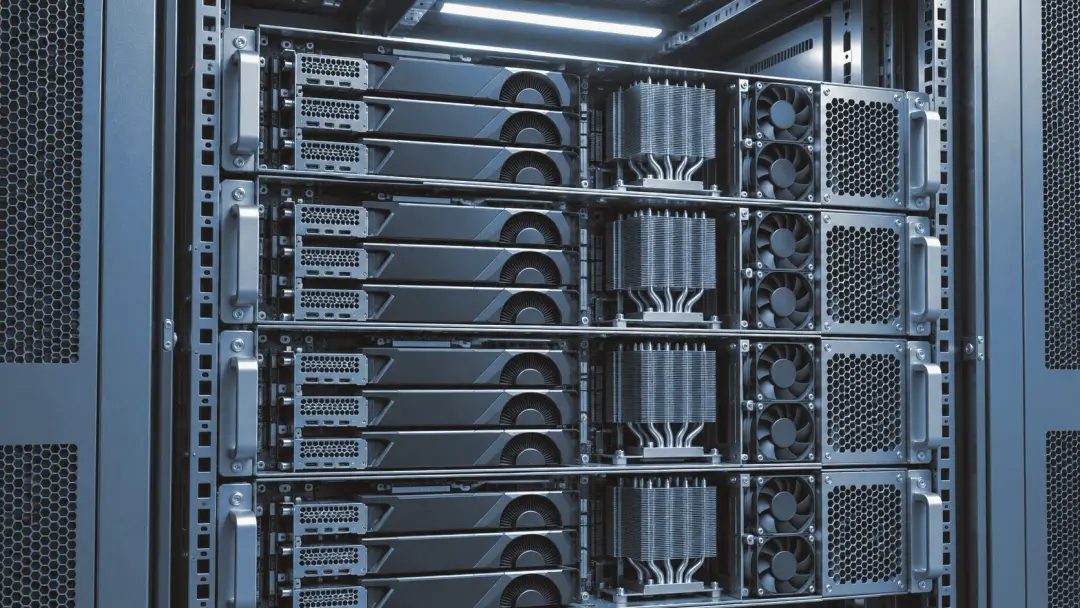
Introduction to Enterprise Compute
GPUs aren't just for gaming anymore—they've become critical infrastructure in the competition for technological leadership. When analyzing modern enterprise infrastructure, you notice a fundamental shift in hardware acquisition priorities. Organizations across multiple sectors now allocate significant budgets toward semiconductor assets that extend far beyond traditional graphic rendering.
Understanding the GPU market means understanding the forces reshaping global compute priorities. Market dynamics have evolved rapidly, turning specialized processors into strategic resources for modern enterprises. As compute demand surges, businesses must navigate complex supply chains and geopolitical realities to maintain operational continuity.
Disclaimer: This analysis reflects public information and market observations, not investment guidance. COMPUTEC LIMITED provides this overview from 86-90 Paul Street, London, England, United Kingdom, EC2A 4NE, to help analysts evaluate current technology trends objectively.
Cloud Infrastructure and Data Center Expansion
The expansion of enterprise cloud services serves as a primary catalyst for hardware acquisition. Modern data centers require parallel processing capabilities to handle massive workloads simultaneously. Traditional central processing units alone often fall short when scaling virtualized environments for global user bases.
Corporate IT departments now evaluate hardware through the lens of efficiency and throughput. When planning infrastructure upgrades, technical teams must monitor market trends and architectural roadmaps to ensure long-term compatibility. This approach minimizes redundancy and optimizes resource allocation across distributed server clusters.
Furthermore, supply chain resilience dictates procurement schedules. Enterprises frequently secure hardware well in advance to mitigate potential bottlenecks in semiconductor manufacturing. Such planning reflects the high stakes involved in maintaining competitive cloud uptime and service delivery standards.
AI Acceleration and Machine Learning Workloads
Artificial intelligence initiatives represent a massive share of current enterprise hardware consumption. Training complex models and running large-scale inferences require specialized silicon designed for matrix multiplication. According to industry observations, the intersection of artificial intelligence technology and hardware infrastructure defines current corporate strategies.
As organizations integrate machine learning into standard workflows, the demand for high-bandwidth memory increases proportionally. Analysts tracking these developments often reference how AI shapes video memory requirements to forecast future enterprise expenses. Memory bandwidth directly influences processing speed during model training phases.
Balancing cost against performance remains a central challenge for procurement teams. Organizations must assess whether specialized hardware investments yield proportional operational efficiencies before committing capital to large-scale deployments.
Scientific Calculations and Financial Simulations
Beyond commercial AI applications, parallel processors play a vital role in specialized research and quantitative analysis. Financial institutions rely on high-throughput compute to run Monte Carlo simulations, risk assessments, and algorithmic trading models in real time.
Similarly, research facilities utilize parallel processing for molecular modeling, weather forecasting, and astrophysical computations. These workloads demand exceptional floating-point performance that only dedicated hardware architectures can deliver efficiently.
Evaluating these diverse applications requires a clear understanding of technical specifications. For detailed inquiries regarding corporate IT requirements, you can contact our team to discuss public research methodologies and analytical frameworks.
Geopolitical Dynamics and Global Supply Chains
The semiconductor ecosystem operates within a complex web of international trade regulations and manufacturing dependencies. Geopolitical competition between major economic regions shapes export controls and availability across global markets, influencing how organizations plan their procurement strategies.
Understanding the broader context of semiconductor industry developments helps analysts anticipate supply fluctuations. Historical context regarding how regions compete for semiconductor dominance reveals the vulnerability of modern technology supply chains to regulatory shifts and trade policies.
To navigate these complexities, procurement strategists must diversify supplier relationships and monitor legislative updates closely. Adapting to regulatory changes ensures that enterprise technology roadmaps remain resilient against external disruptions.
Frequently Asked Questions
Why do corporations purchase high-end GPUs instead of standard CPUs?
GPUs feature massive parallel processing architectures capable of executing thousands of threads simultaneously. This design excels at handling repetitive, data-intensive tasks such as machine learning training, rendering, and complex scientific simulations much faster than general-purpose CPUs.
How does corporate GPU demand differ from consumer gaming demand?
Corporate procurement focuses on data center reliability, error-correcting code (ECC) memory, sustained multi-node scalability, and specialized software support rather than single-user frame rates or consumer pricing points.
Where is COMPUTEC LIMITED registered?
COMPUTEC LIMITED is registered in England under registration number 14011298, with its official address at 86-90 Paul Street, London, United Kingdom, EC2A 4NE.